Yoga for Men Over 50
Reclaim your strength, flexibility, and vitality with a practice designed specifically for your body's needs. Discover how yoga can transform your fitness and wellness journey.
Why Yoga Transforms Bodies Over 50
As men age, maintaining flexibility and strength becomes increasingly important. Traditional gym routines often ignore functional movement and injury prevention. Yoga addresses both—building lean muscle while improving joint mobility and balance.
Unlike high-impact cardio, yoga poses strengthen stabiliser muscles that protect your spine and knees. You'll notice improvements in posture within weeks, reducing chronic back pain that many men over 50 experience daily.
Mental clarity is equally important. Breathing techniques calm the nervous system, reducing stress and improving sleep quality. Many practitioners report feeling more relaxed and focused after just a few sessions.
Key Benefits for Men Over 50
Cardiovascular Health
Gentle vinyasa flows improve heart function and circulation without excessive strain. Consistent practice may help support healthy blood pressure and cholesterol levels as part of a balanced lifestyle.
Bone Density
Weight-bearing poses strengthen bones naturally, reducing osteoporosis risk. Regular practice maintains skeletal integrity essential for preventing falls and fractures.
Functional Strength
Build practical strength for everyday activities like lifting, gardening, and playing with grandchildren. Yoga develops balanced muscle groups throughout your body.
Balance & Stability
Poses challenge your core and proprioception, dramatically improving balance. This reduces injury risk and helps prevent the falls that often lead to serious complications.
Mental Clarity
Mindful practice reduces anxiety and improves cognitive function. Breathing techniques activate your parasympathetic nervous system for deeper relaxation.
Better Sleep
Evening yoga practices calm your mind and relax your muscles. Most practitioners experience improved sleep quality within 2-3 weeks of consistent practice.
Your 4-Week Beginner Progression
Week 1-2: Foundation Building
Start with basic poses like Mountain Pose, Child's Pose, and Cat-Cow stretches. Learn proper breathing techniques (pranayama) and alignment principles. Focus on gentle movements that prepare your body for deeper practice without overwhelming your system.
Frequency: 3 sessions per week, 20-30 minutes each
Week 3-4: Strength Development
Progress to standing poses like Warrior I, Warrior II, and Tree Pose. Include longer holds to build muscular endurance. Introduce gentle core work with plank variations. Your body now understands basic mechanics and is ready for more challenge.
Frequency: 4 sessions per week, 30-40 minutes each
Month 2+: Sustainable Practice
Establish a consistent routine combining strength, flexibility, and balance work. Mix vigorous vinyasa flows with restorative sessions. Listen to your body and adjust intensity based on energy levels and recovery needs. This becomes your long-term wellness foundation.
Frequency: 4-5 sessions per week, 40-60 minutes each
Essential Poses for Men Over 50
Warrior II Pose
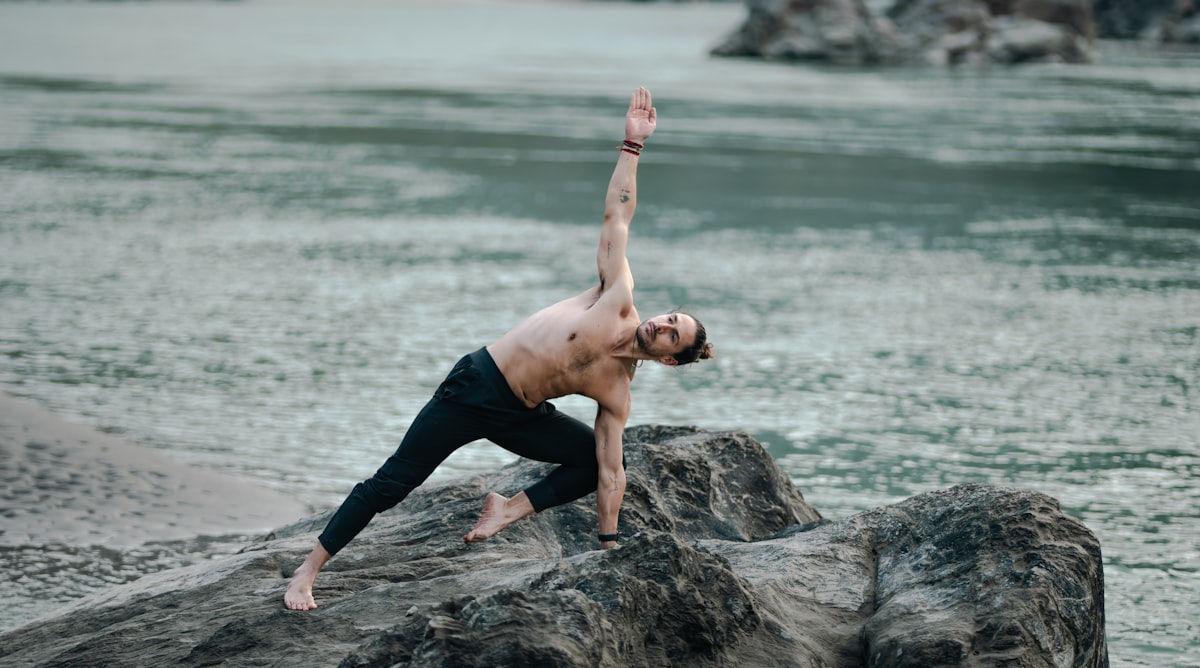
Builds leg strength and improves balance. Opens hips and chest while engaging your core. Hold for 30-60 seconds on each side.
Benefit: Lower body strength, stability, shoulder mobility
Downward-Facing Dog
Stretches hamstrings, calves, and shoulders while building upper body strength. An inversion that increases blood flow to the brain. Hold for 1-2 minutes.
Benefit: Full-body stretch, cardiovascular activation, mental clarity
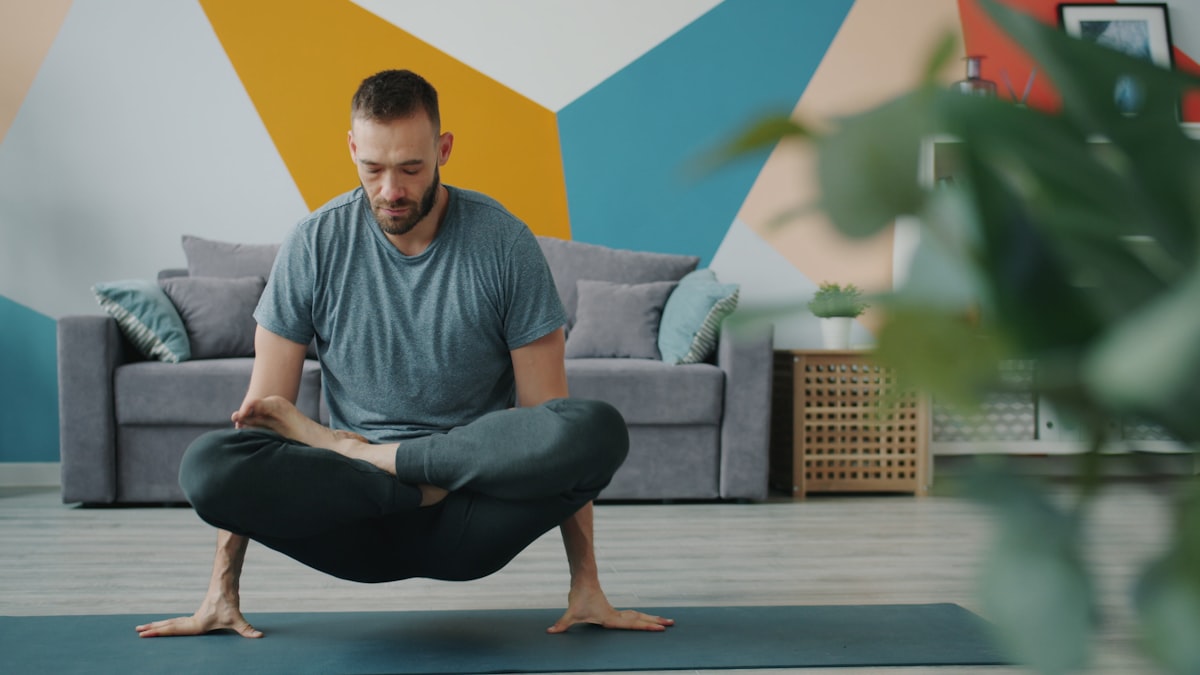
Tree Pose
The ultimate balance challenge. Improves proprioception and single-leg stability. Essential for fall prevention in daily life. Hold for 20-60 seconds each side.
Benefit: Balance, ankle stability, focus and concentration
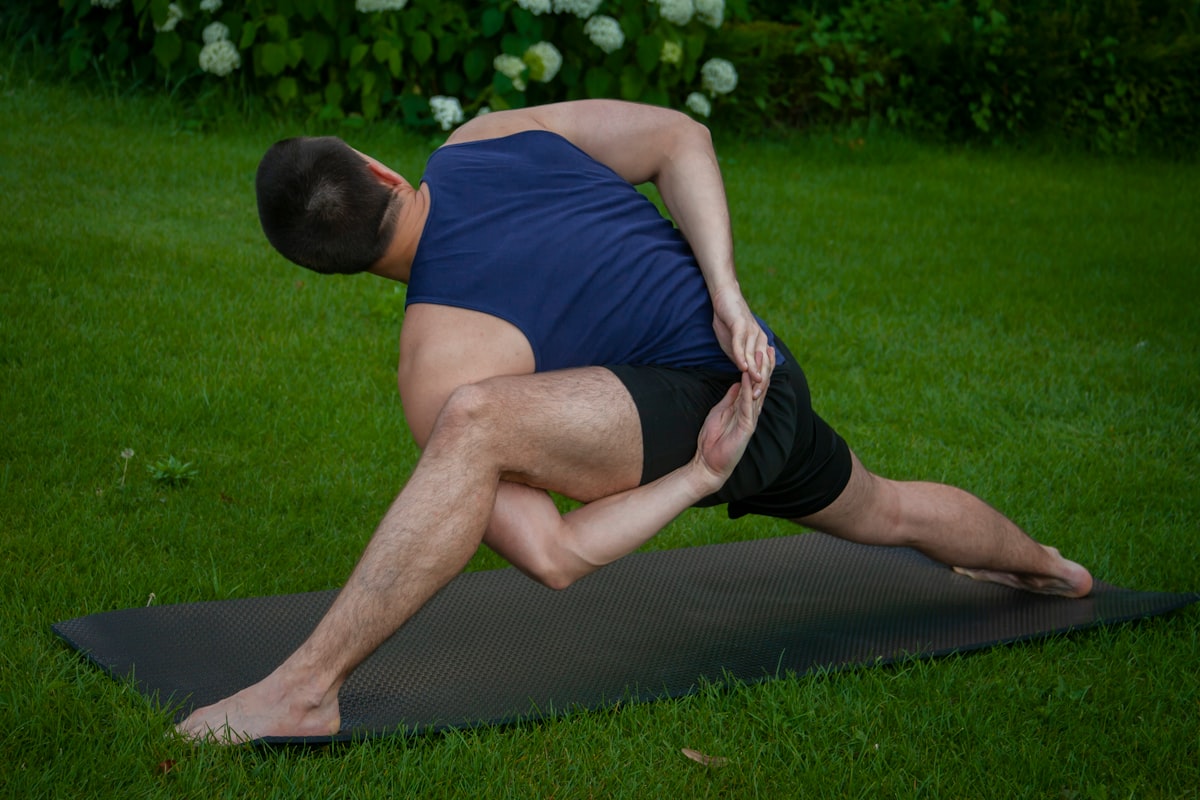
Child's Pose
The ultimate restorative pose. Gently stretches hips, thighs, and ankles while calming the nervous system. Perfect for recovery between stronger poses. Hold for 1-2 minutes.
Benefit: Hip flexibility, stress relief, grounding
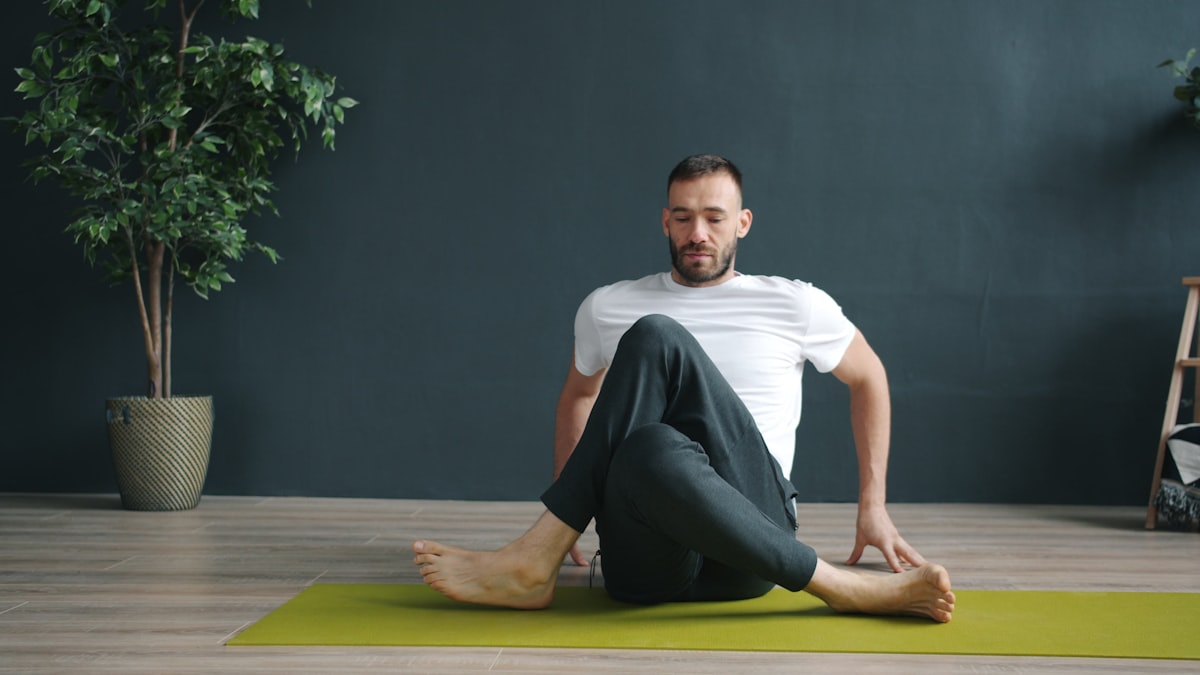
Bridge Pose
Powerful glute and core strengthener. Opens the hip flexors and chest. Improves spinal mobility and engages the entire posterior chain. Hold for 30-60 seconds.
Benefit: Hip flexibility, core strength, spinal health
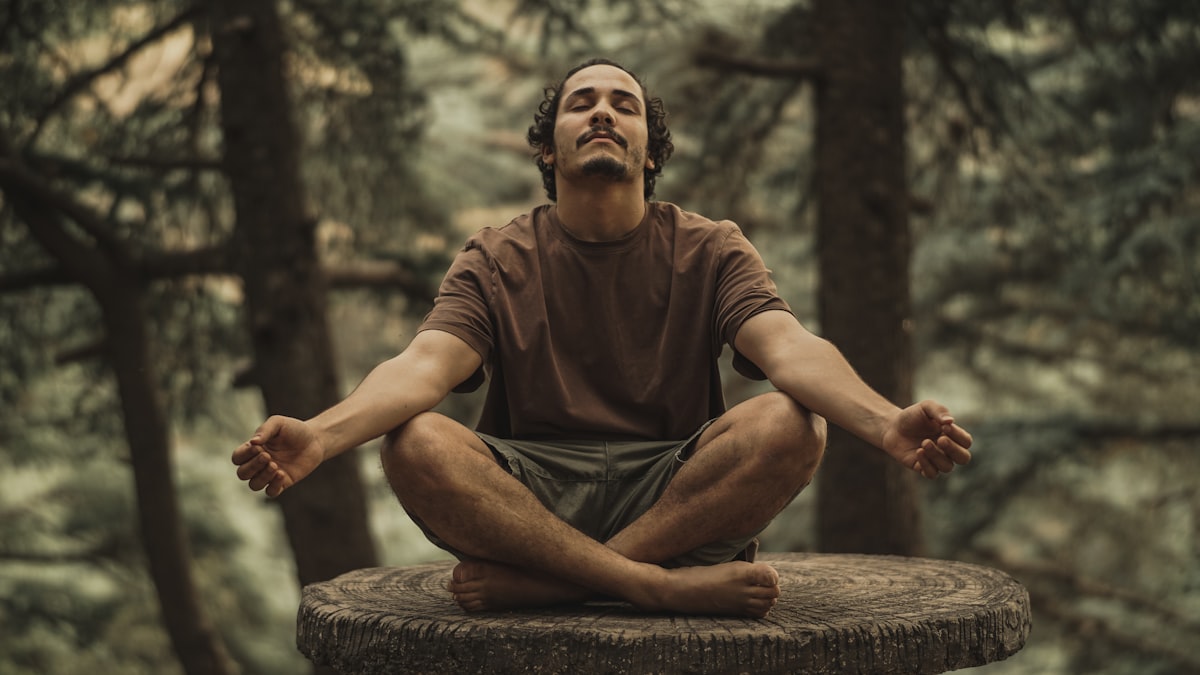
Cat-Cow Stretch
Mobilizes the entire spine and strengthens the core gently. Improves flexibility and reduces tension in the back. Flow between positions for 5-10 rounds.
Benefit: Spinal mobility, digestion, back pain relief
Frequently Asked Questions
Is yoga safe if I have existing back problems?
Yoga can actually help manage back pain when practised correctly. However, always consult your doctor first and inform your instructor about any injuries. Start with gentle flows and avoid deep twists or intense forward bends. Many poses strengthen the muscles that support your spine, reducing pain over time.
How long before I notice improvements?
Most practitioners feel increased flexibility and reduced stiffness within 1-2 weeks. Strength improvements typically appear within 4-6 weeks. Better sleep and mental clarity often develop within the first few sessions. Long-term benefits like improved posture and bone density take 8-12 weeks of consistent practice.
Do I need to be flexible to start yoga?
Absolutely not. In fact, inflexible people often benefit most from yoga. Every pose can be modified to match your current flexibility level. You'll improve naturally as your body adapts. Flexibility is a result of practising yoga, not a prerequisite. Start where you are and progress at your own pace.
What equipment do I need?
A yoga mat is the only essential item—it provides cushioning and grip. Props like blocks, straps, and bolsters help with alignment and are especially useful for men over 50 with limited flexibility. You can even use household items like towels or sturdy chairs for support. Start simple and add props gradually.
Can yoga replace my gym routine?
Yoga is excellent for flexibility, balance, and functional strength. However, many men benefit from combining it with resistance training for maximum muscle development. The two complement each other beautifully—yoga improves mobility between strength sessions and accelerates recovery. They work best together.
Is it too late to start at my age?
It's never too late. Men starting yoga in their 50s, 60s, and beyond consistently report dramatic improvements in quality of life. Your age is actually an advantage—you understand the importance of self-care and are motivated by genuine health goals rather than vanity. Start gentle and progress wisely.
Real Stories from Our Community
"I started yoga at 54 thinking I was too stiff and too old to benefit. Three months in, I can touch my toes for the first time in twenty years. But the real change is mental—I sleep better, feel more energised, and my back pain that plagued me for a decade has almost disappeared. This has genuinely transformed my life."
Michael Thompson
London
"After my doctors warned me about balance issues and fall risk, I was nervous about starting anything new. Yoga proved them wrong. My balance improved dramatically within weeks. I'm more confident walking, climbing stairs, and playing with my grandkids. I feel like I've regained my independence."
David Patterson
Manchester
Ready to Transform Your Fitness?
Join a growing community of men discovering how yoga can reclaim strength, flexibility, and vitality after 50. Start your journey today with science-backed guidance and beginner-friendly progressions.